Optical is the sensor that turns a track into evidence. RF, radar and acoustic can all say "something is there"; only a camera with good AI can say "that is a DJI Mavic carrying a payload, here's the video." This guide covers how cameras detect drones, why they almost always need a cue, and how two of them fix a drone in 3D by triangulation.
Seeing a needle in the sky
The core challenge is scale: a drone at 500 m can be a handful of pixels against a vast, cluttered background of sky, clouds, buildings and birds. This is small-object detection, one of the harder problems in computer vision. Systems tackle it with high-resolution sensors, narrow fields of view, motion cues (a moving speck against static background), and detection models — YOLO-class networks via OpenCV pipelines — trained specifically on distant drones, not the generic object sets that come out of the box.
EO and IR: two cameras for two conditions
- Electro-optical (visible): highest detail and best for identification — reading the model, seeing a slung payload — but blind at night and defeated by glare and haze. Same sensor trade-offs as our camera payloads guide.
- Thermal (infrared): sees the warm motors and battery at night and through light haze, at lower resolution and higher cost. Small electric drones aren't very hot, so thermal detection range is modest — but at night it may be all you have.
Serious optical trackers carry both in one gimbal and switch by conditions.
Why optical is usually a slave sensor
Staring a narrow, high-zoom field of view at the entire sky hoping a drone wanders in is hopeless. So optical almost always runs cued: RF, radar or acoustic gives a rough bearing, a pan-tilt-zoom camera slews there, and the AI confirms and identifies. This division of labour — wide sensors cue, the camera confirms — is the backbone of layered counter-UAS and the reason sensor fusion matters so much.
Triangulation: from angle to 3D position
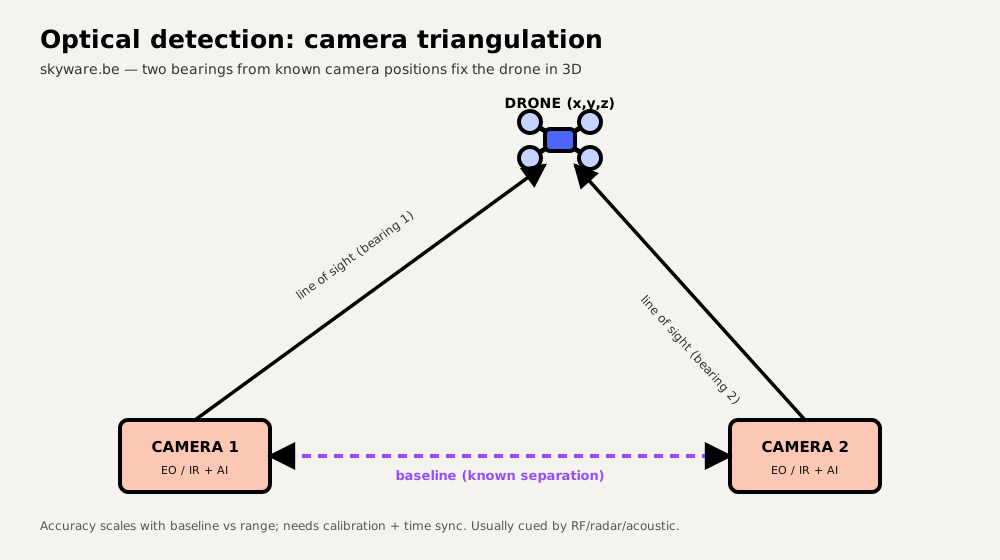
A single camera gives a precise bearing but no range — the drone could be small-and-near or large-and-far along the same line. Two cameras at known, separated positions each contribute a bearing, and where the two lines of sight cross is the drone's position in 3D. It's exactly the stereo geometry behind photogrammetry, applied to a moving target, and the accuracy depends on the baseline (camera separation) versus range, plus precise camera calibration and time synchronisation — the same PPS time-sync discipline that mapping payloads need, because both cameras must measure the same instant.
The limits, plainly
- Line of sight is absolute: anything the drone hides behind, it disappears behind.
- Weather and light: fog, heavy rain, night (EO) and low sun all cut range hard.
- False positives: birds, aircraft and floaters fool detectors; classification quality is everything.
- It needs a cue: unaided wide-area optical search is impractical at useful ranges.
Confirmation, identification and evidence. When a decision-maker has to act, "the RF sensor thinks it's a drone" is weaker than a zoomed video of the aircraft and its payload. Optical is what makes the rest of the system trustworthy — and, via triangulation, contributes a hard 3D track of its own.
Frequently asked questions
How does camera-based drone detection work?
Electro-optical and infrared cameras feed video to an AI object detector trained to spot drones. Because a drone is a tiny, fast target in a huge sky, cameras usually work as a slave — another sensor cues where to look, then a pan-tilt-zoom camera confirms, identifies and tracks it.
How do two cameras find a drone's 3D position?
By triangulation. Each camera measures the bearing (angle) to the drone. With the cameras at known, separated positions, the two lines of sight intersect at the drone's location in 3D — the same stereo-vision geometry used in photogrammetry, applied to a moving target.
What stops optical drone detection from working?
Line of sight and light. Fog, rain, darkness (for EO), sun glare, and anything the drone hides behind all defeat it. Thermal cameras help at night and in haze but cost more and resolve less detail. Optical is the identification layer, strongest when cued and in clear air.
This is independent educational content — not legal, spectrum, conformity-assessment or flight-safety advice. Rules change and differ by country. Verify current requirements with EASA, your national aviation authority, your national spectrum regulator (in Belgium, BIPT) and qualified counsel before you operate or rely on any figure here.