Agricultural spraying is one of the biggest commercial drone applications worldwide — and one Europe has largely locked out. That's now moving. A reform working through the EU legislative machinery would, for the first time, create a route to legal drone spraying across the bloc. Here's the current state, what's changing, and what it means if you build or operate agricultural aircraft.
Drone spraying is prohibited by default in the EU because the Sustainable Use Directive treats it as "aerial spraying", allowing only narrow national derogations. A proposed Article 9a in the Commission's Food & Feed Safety Omnibus would let member states exempt qualifying drone types, with the legislative procedure expected to conclude around late 2026 to early 2027. Today, France, Spain and Hungary have the most developed national frameworks.
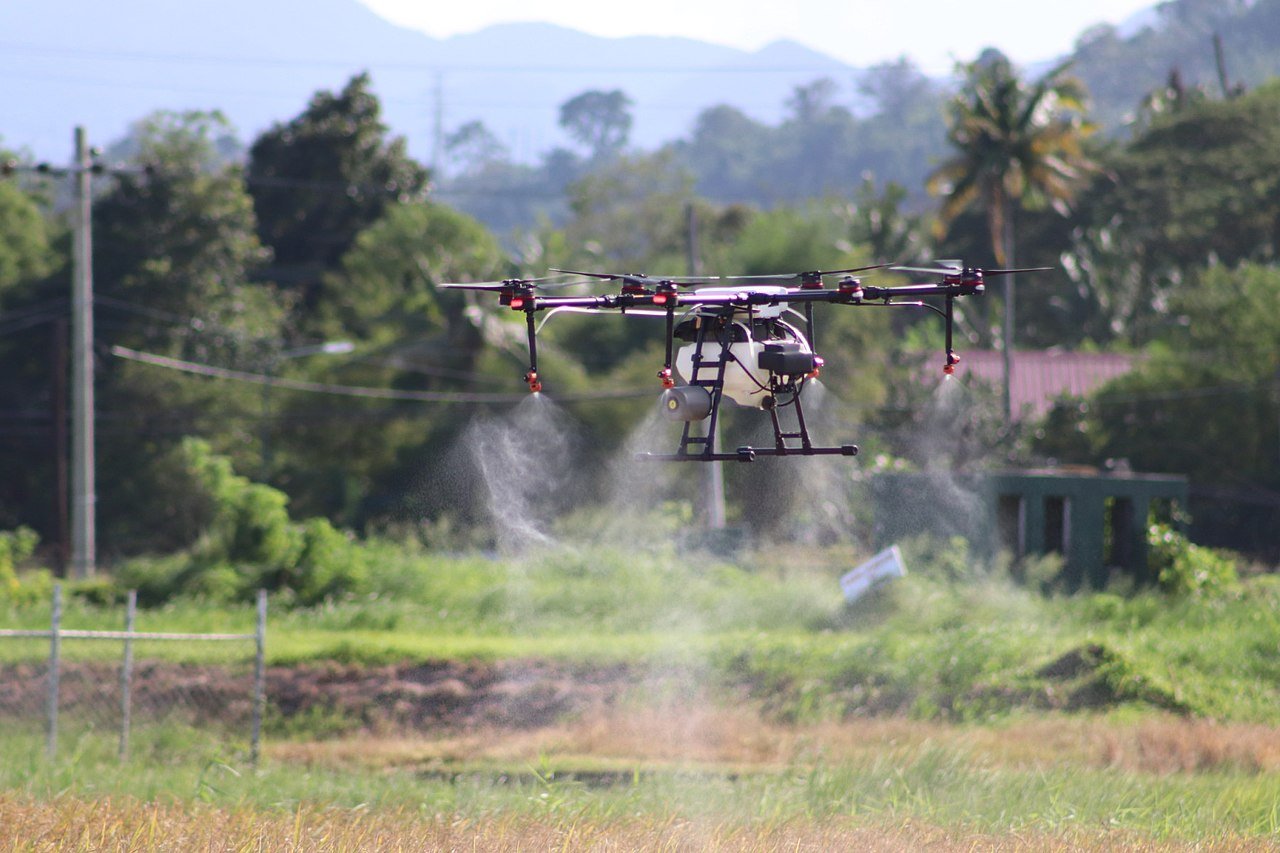
Why it's banned in the first place
The Sustainable Use Directive (2009/128/EC) prohibits "aerial spraying" of plant protection products, with derogations available for specific circumstances. The directive was written with crop-dusting aeroplanes and helicopters in mind — aircraft that spray from height, with real drift risk over large areas. Drones inherited that classification by default, despite operating a couple of metres above the crop with fundamentally different drift behaviour. The result is a rule that arguably regulates the wrong aircraft, and a lot of European farmers watching the rest of the world spray by drone.
What's actually changing
The Commission's Food & Feed Safety Omnibus proposes inserting an Article 9a into the directive. The mechanism matters:
- Member states get the power to exempt specific drone types from the aerial-spraying prohibition.
- But only for drone types the Commission first identifies via delegated acts — so the EU defines what qualifies before any national permission applies.
- The legislative procedure is expected to conclude late 2026 to early 2027, with the delegated acts following.
Read that timeline carefully: even a smooth passage means the practical, operational opening comes after the delegated acts land. This is a 2027-and-beyond market unlocking, not a 2026 one.
Where you can spray today
| Country | Status |
|---|---|
| France | Most developed. Two 2025 laws: one authorising drone application of biocontrol and low-risk products on sloped terrain, another covering drone-based crop disease treatment |
| Spain | Established derogation framework for defined cases |
| Hungary | Developed framework among the earliest movers |
| Germany | Limited — specific vineyard scenarios |
| Most others | Effectively closed, pending the reform |
Conditions vary enormously — which products, which terrain, which operator qualifications. Treat any national framework as a specific permission, not a general one.
Three approvals, not one
This is the point most newcomers miss. A legal spray operation in Europe needs parallel permissions from different regimes:
- Aviation: spray drones are heavy and drop substances, so they're outside the Open category — you need a Specific-category operational authorisation, typically via SORA.
- Product: the aircraft itself faces the usual product rules — class marking and CE obligations where applicable.
- Plant protection: the pesticide regime must permit application by drone. This is the binding constraint, and the one Article 9a addresses.
An aviation authorisation alone does not make spraying legal. Nor does a compliant aircraft.
What it means for builders
Spray platforms are a distinctive engineering problem, and worth understanding before the market opens:
- Huge, shifting payloads. A 20–40 kg tank that empties in flight moves both mass and centre of gravity continuously — the hardest case in the payload capacity and mass budget discussion.
- Well over 25 kg MTOM, which puts them firmly outside the Open category by weight alone.
- Precision matters legally, not just agronomically. Drift control, accurate swath placement and repeatable lines are what a regulator will care about — which makes RTK positioning and terrain-following core requirements.
- Corrosive chemicals plus electronics — sealing, cleaning and maintenance regimes are part of the design, not an afterthought.
Europe's agricultural drone market is forecast to grow steeply, and the regulatory bottleneck is finally being addressed — but on institutional timescales with delegated acts still to come. The sensible posture for a European operator or builder: develop and validate now, in the countries with working derogations, keep your safety case and evidence portable, and be ready when the delegated acts define which aircraft qualify. The teams positioned on day one will be the ones who did the paperwork while everyone else waited for permission.
Frequently asked questions
Is drone spraying legal in Europe?
Not generally. The Sustainable Use Directive (2009/128/EC) classifies spraying from any aircraft as 'aerial spraying', which is prohibited by default and only permitted under narrow national derogations. Several member states — France, Spain, Hungary and Germany for specific cases — have built frameworks under those derogations, but there is no EU-wide permission today.
Will the EU allow agricultural spray drones?
Probably, in stages. The European Commission's Food & Feed Safety Omnibus proposes a new Article 9a that would let member states exempt specific drone types from the aerial-spraying ban, once the Commission adopts delegated acts defining which types qualify. The legislative procedure is expected to conclude around late 2026 to early 2027.
Which European countries allow drone crop spraying?
France, Spain and Hungary have the most developed derogation frameworks, with Germany permitting limited vineyard cases. France passed two relevant laws in 2025 covering biocontrol and low-risk products on steep terrain and drone-based crop disease treatment. Conditions differ substantially per country.
What do I need to fly a spray drone in the EU?
Three separate approvals, not one: an aviation authorisation for the flight (spray drones exceed Open-category limits, so the Specific category applies), product-side compliance for the aircraft, and — the hard one — plant-protection-product approval permitting application by drone under your national rules.
This is independent educational content — not legal, spectrum, conformity-assessment or flight-safety advice. Rules change and differ by country. Verify current requirements with EASA, your national aviation authority, your national spectrum regulator (in Belgium, BIPT) and qualified counsel before you operate or rely on any figure here.