LiPo packs are the highest-energy, least-forgiving thing in your workshop. Treated properly they're perfectly safe and last hundreds of cycles; treated carelessly they puff, sag, and occasionally set fire to things. This is the practical safety guide — the habits that cost nothing and prevent nearly every LiPo incident. For the chemistry and pack-selection side, see the drone battery guide.
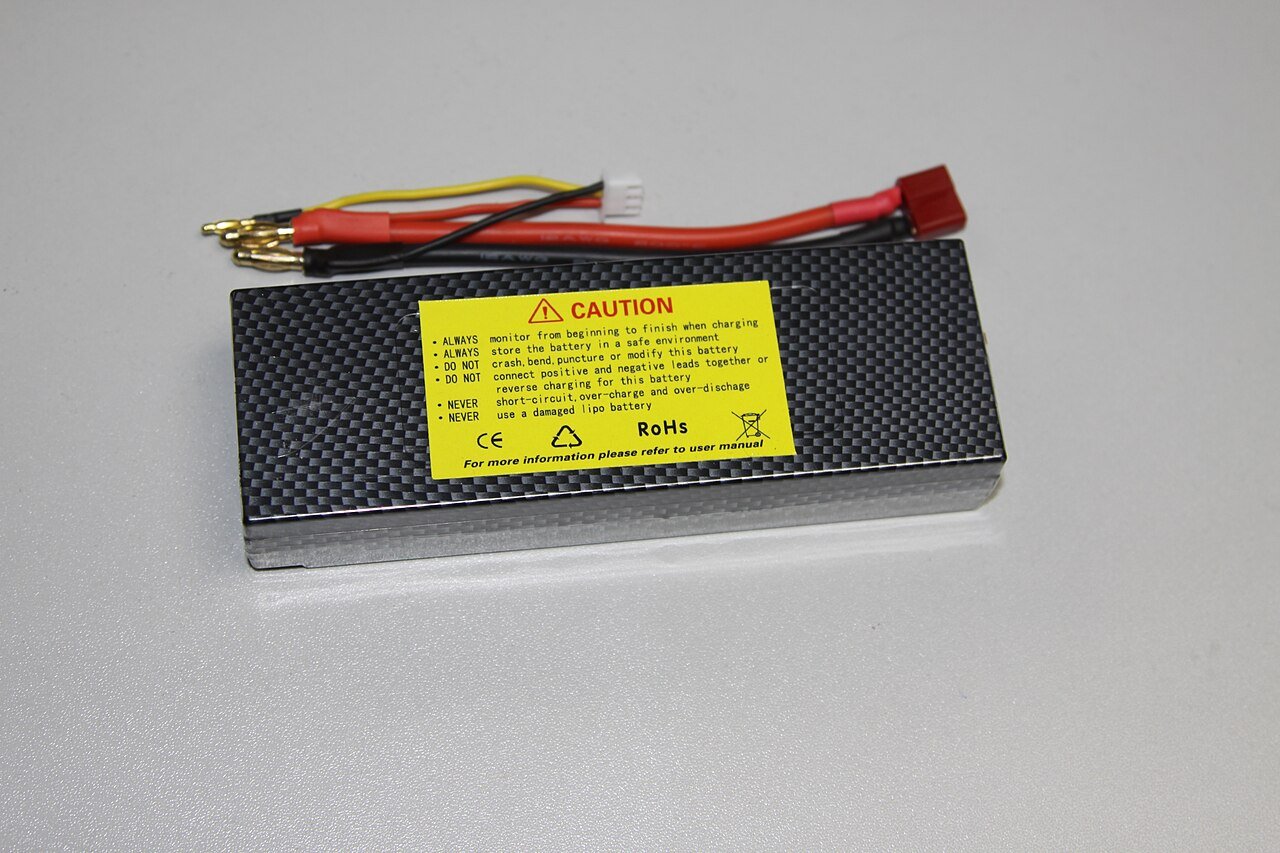
Why LiPos are different
A lithium-polymer cell stores a lot of energy in a soft foil pouch with a flammable electrolyte and no meaningful mechanical protection. Push it outside its comfortable window — overcharge, over-discharge, over-current, heat, or physical damage — and it can enter thermal runaway: the cell heats itself, faster and faster, until it vents and burns. That fire brings its own oxidiser, so it doesn't smother easily. The engineering answer isn't fear, it's staying inside the window.
The voltages that matter
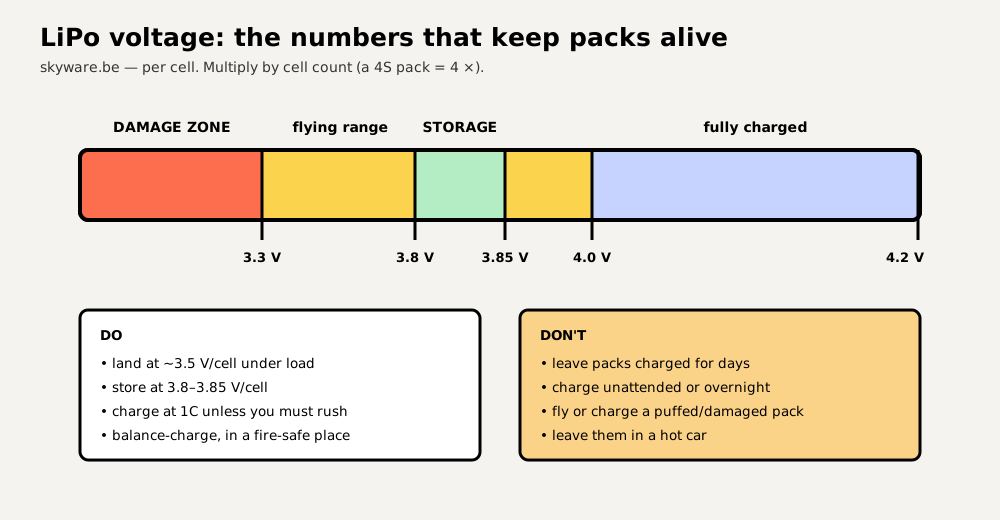
- 4.2 V/cell — full. Fine briefly; damaging as a resting state.
- 3.8–3.85 V/cell — storage. Where packs should live whenever you're not about to fly.
- ~3.5 V/cell under load — land now. Voltage recovers when you unload, so this is roughly 3.7–3.8 V resting.
- Below ~3.3 V/cell — damage territory. Repeatedly going here kills capacity; going very low makes a pack unsafe to recharge at all.
Charging: the five rules
- Be present. Never charge unattended or overnight. This single habit prevents most serious incidents.
- Balance-charge. Use a proper balance charger with the balance lead connected, so cells stay matched. A pack whose cells drift apart is a pack heading for trouble.
- Charge at 1C unless you must rush. A 5000 mAh pack at 1C = 5 A. Faster charging is possible on packs rated for it, at a cost in cycle life and heat.
- Charge on something that can't burn — a LiPo bag, ammo can, or ceramic tile, away from anything flammable. Contain the failure you hope never happens.
- Set the right cell count. Telling the charger "4S" when you've plugged in a 3S pack is a classic, expensive mistake. Modern chargers detect it; check anyway.
Storage and transport
Store packs at storage voltage, at room temperature or cooler, in a fire-resistant container, away from metal that could short the connectors. Heat is the silent killer — a pack left on a car dashboard in summer ages more in an afternoon than in months of proper storage. For transport, cap or cover connectors and keep packs from sliding around; for air travel, LiPos go in carry-on only, within the airline's watt-hour limits, and damaged packs don't fly at all.
Stop using a battery when it puffs (any swelling at all), when its internal resistance climbs or a cell drifts out of balance repeatedly, when it sags hard under normal load, or after any crash impact or puncture — even if it looks fine. A pack that has been physically damaged can fail hours later. Batteries are consumables with a cost-per-flight; flying a suspect one to save €40 is the worst trade in the hobby.
When it does go wrong
A venting LiPo produces thick, toxic smoke and intense heat. Priorities in order: get people away and ventilate; don't inhale the fumes; if it's safe and the pack is already contained (bag, ammo can, sand bucket), let it burn out there. Water can be used in quantity to cool surrounding material — but the practical reality for a hobbyist is that you cannot "put out" a cell in runaway, you can only stop it spreading. Which is exactly why the charging surface and container rules above matter more than any extinguisher.
Habits that make packs last
- Charge shortly before flying, not the night before.
- Bring packs to storage voltage the same evening you land.
- Let packs cool before charging, and never charge a pack that's still hot from flight.
- Label packs and track cycles — trends beat guesswork, the same principle as the flight test log discipline.
- Size the pack so you're not routinely landing at the bottom of the range (see the endurance math).
Frequently asked questions
At what voltage should I store LiPo batteries?
Around 3.8–3.85 V per cell — that's what your charger's 'storage' mode targets. A pack left fully charged (4.2 V/cell) for days ages measurably faster and is more likely to puff, while a pack left flat can drop below the point where it's safe to recharge.
Can I leave a LiPo battery charging overnight?
No. Charge packs while you're awake, present, and near them — on a non-flammable surface, ideally in a LiPo bag or metal container. Most LiPo fires start during charging, and the difference between a scare and a house fire is usually someone being in the room.
What do I do with a puffed LiPo battery?
Stop using it immediately — a swollen pack is a failed pack and will not recover. Discharge it fully (many chargers have a discharge function, or use a resistive load), then take it to a battery recycling point. Never bin it, never fly it, and don't store it with your good packs.